


Antibacterial therapy for prostatitis is not the only treatment.Antibacterial drugs are prescribed only if there are appropriate indications, mainly for periodic exacerbations and increasing severity of the manifestations of the disease.
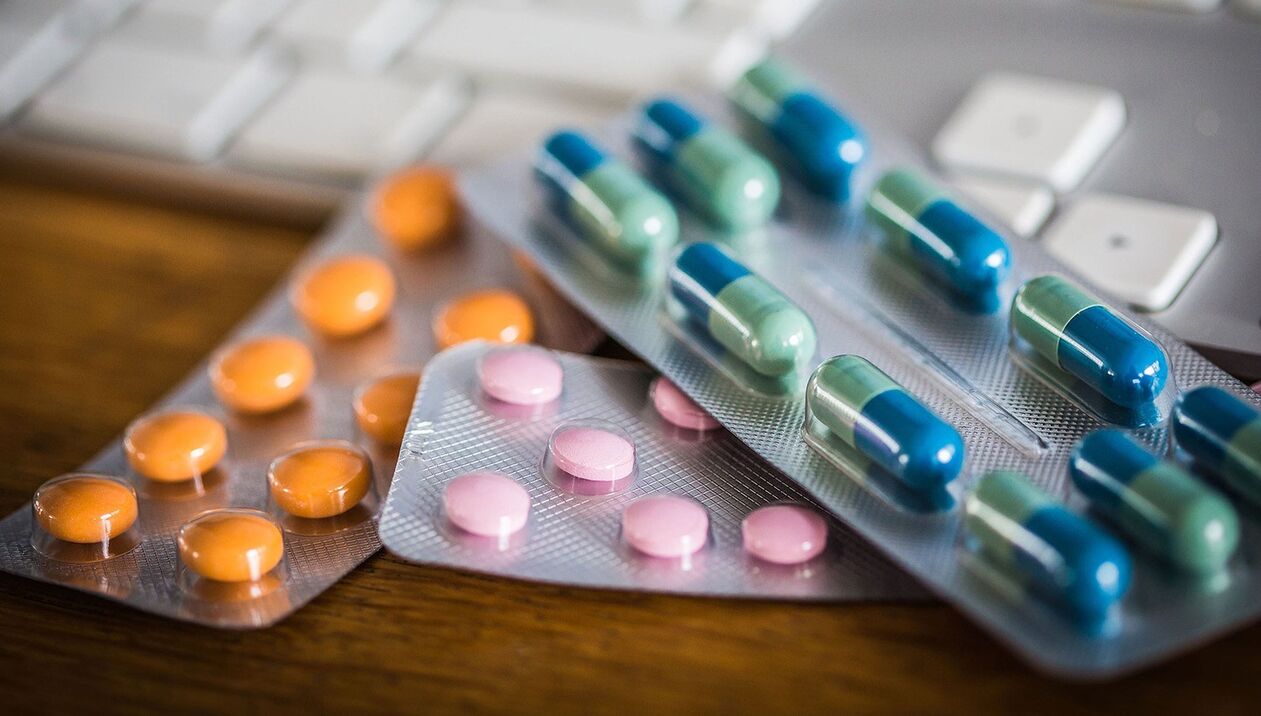
Efficacy of drugs to treat prostatitis
It is known that different antibiotics can cross the prostate barrier to different degrees, and therefore their concentration in the prostate and therefore their effectiveness in the treatment of prostatitis is different.Therefore, from the drugs with the highest sensitivity of the flora, those with the maximum ability to penetrate the prostate will be selected.A similar approach to treating prostate tumors can speed recovery significantly.
Broad-spectrum drug for the treatment of prostatitis
Another condition for the effectiveness of a drug used to treat prostatitis is that it has a wide spectrum of antibacterial effect.This is due to the fact that it is quite difficult to reliably determine the flora living in the prostate.Substances with a broad spectrum of antibacterial activity include mainly drugs of the penicillin group.Tetracycline drugs have valuable properties in terms of penetration through the prostate barrier and range of antibacterial activity.
Modern drugs of the fluoroquinol group
New antibacterial agents that have significant advantages over others are drugs of the fluoroquinolone group.These drugs have a broader spectrum of antibacterial effects and the ability to accumulate in the prostate at high concentrations when administered orally.In addition to their direct antibacterial effect, fluoroquinolones almost never cause immunodeficiency in patients, and it is especially important that microorganisms do not develop resistance to them.
Tetracycline is also widely used as antibacterial therapy.
A young patient prescribed a course of antibacterial treatment should be aware that the drugs used may have a toxic effect on sperm.Therefore, between the use of these drugs and intended conception, there must be a gap of at least 4 months, which exceeds the entire spermatogenic cycle.
As a rule, antibacterial drugs are prescribed for chronic bacterial prostatitis or infectious chronic prostatitis.For chronic noninfectious prostatitis, treatment tactics remain controversial and controversial.Antibacterial drugs are prescribed to these patients in the hope of curing the underlying infection.
If chronic prostatitis is suspected, antibacterial drugs are not prescribed immediately, that is, not from the first examination.As a rule, within no more than a few days, the doctor examines the patient to detect infection.During this period, symptomatic treatment is recommended, usually with an anti-inflammatory effect in the form of 50 mg of diclofenac or 100 mg of suppositories, which have anti-edema and analgesic effects.
After determining the type of bacteria and their sensitivity, antibacterial drugs are prescribed, of which fluoroquinolones are the most effective.Treatment is carried out for 4 weeks or more (minimum 28 days) under clinical and bacteriological control.
If the effect is positive in patients with chronic recurrent prostatitis, the antibacterial drug should be used for up to 6-8 weeks.Sometimes antibiotic therapy is extended to 16 weeks and then complete cure is possible.If there is no positive result, the used antibacterial drug is canceled, but not earlier than after 2 weeks of treatment.An ideal antibacterial drug should be fat-soluble, not bound to serum proteins, and weakly alkaline for maximum concentration in the prostate itself and not in the plasma.The best in terms of these requirements are fluoroquinolones, which have the best pharmacological properties in the treatment of chronic prostatitis;they produce sufficient concentrations in the prostate, in its secretions and sperm, and are active against most bacteria found in chronic prostatitis.
Therefore, the necessary condition to achieve maximum effectiveness of antibacterial therapy for chronic prostatitis is to comply with the following general principles:
- isolation and determination of microflora that causes prostatitis, and identification of its sensitivity to antimicrobial agents;
- choose the most effective drugs that do not cause side effects;
- determine the effective dosage, method and frequency of administration, taking into account the characteristics of the selected drug's action;
- timely initiation of treatment and a sufficiently long course of antimicrobial therapy to ensure the maximum possible effect;
- The combination of antibacterial drugs, with each other as well as with drugs and procedures, enhances the antibacterial effect, reduces the incidence of complications and improves microcirculation in the prostate;
- carrying out complex therapy taking into account the characteristics of the patient’s general health.
Sometimes, with prolonged or excessively active antibacterial therapy, intestinal dysbiosis develops (reduction in the number and activity of normal intestinal microflora).In these cases, it is recommended to use drugs that promote its recovery.
Results of medical treatment of prostatitis
The strategies and tactics of antibacterial therapy are complex and varied, but its use can improve the effectiveness of treatment.
After successful antibiotic therapy for prostatitis, a more or less long period of well-being may occur.But, as a rule, sooner or later the painful sensations that cause anxiety return.Therefore, the use of antibacterial drugs in itself is not considered sufficient.Good results are achieved by a therapeutic program aimed at increasing local and general resistance.In this case, you can count on the success of antibacterial therapy or long-term remission.
Improves microcirculation in the prostate
In all forms of chronic prostatitis, in addition to affecting the microflora, they also try to restore microcirculation in the prostate, improve the flow of secretions from the glandular ducts, increase the intensity of metabolic processes in the source of inflammation and local and general resistance.
Nonsteroidal anti-inflammatory drugs are considered as an important step in the treatment of chronic prostatitis.Their positive effect on microcirculation has been proven.
Anticongestive treatment includes measures aimed at reducing venous congestion in the pelvic area: stopping interrupted sexual intercourse, sedentary lifestyle, frequent alcohol consumption, etc.For varicose veins of the lower limbs and hemorrhoidal veins that can also cause prostatitis, surgical treatment of these diseases is performed.For congestive non-infectious prostatitis, only decongestant therapy is carried out.
The treatment complex for chronic prostatitis includes special drugs with highly effective effects.In some cases of exacerbation of chronic prostatitis with dysuria due to venous stasis, drugs that reduce the tone of prostatic smooth muscle are used to reduce the urge to urinate.But only a doctor can recommend them.
Eliminates pain caused by prostatitis
Since the presence and severity of pain in prostatitis serves as the main indicator for patients that determines their attitude towards this disease and affects the manifestation of depression, analgesic therapy in the treatment of chronic prostatitis is one of the most important components in the general treatment of the disease.The pain syndromes observed in chronic prostatitis are very diverse in their localization, duration and degree of intensity.In this regard, the method of using analgesic drugs is of great importance.
Oral (by mouth) administration is quite effective and temporarily relieves pain.Rectal use of analgesics in the form of suppositories and microenemas is even more effective because they use the combined effect of analgesics and anti-inflammatory drugs, as well as a temperature effect.To change the tone of the gland, belladonna extract can be added to suppositories.
Strengthens the immune system
When treating chronic prostatitis, it is very important to increase the body's reactivity and defenses, which often helps to cope with any disease.With chronic prostatitis, the body's defenses are reduced.In this regard, without using general immunotherapy for chronic prostatitis, it is difficult to achieve success.
Sometimes a medication used to treat chronic prostatitis increases the body's ability to react.Having a febrile effect (increasing body temperature), the drug aggravates chronic inflammation in the prostate and converts it to acute, helping to accelerate the recovery process because it is easier to treat inflammatory diseases in the acute stage.The drug works when it quickly enters the bloodstream.Therefore, it is administered intravenously, starting with a small, daily dose, increasing the dose gradually and carefully.Using this intravenous method, patients with chronic prostatitis must be treated as inpatients for monitoring.The drug is taken daily for 9-10 consecutive days.At the peak of the course of chronic artificial inflammation of the prostate, from about the 4th day, the use of 1-2 antibiotics and sulfonamides or other drugs in fairly high doses will begin.To improve blood supply to the prostate, physiotherapy is performed simultaneously, and to improve the flow of prostate secretions, daily massage is performed.The therapeutic effect in the form of improvement or recovery is achieved to varying degrees in almost every patient.
Hormone therapy
It is necessary to use sex hormone preparations to treat prostatitis very carefully.In patients with chronic prostatitis for many years and decades, such a need may arise.However, it is better to use them after determining the content of sex hormones in the serum (testosterone, estradiol, prolactin, FSH, LH).Simpler tests may also be performed, for example, cytological studies of debris from the squamous fossa of the urethra.If there is a sex hormone imbalance, hormone medications may be included in the treatment regimen.
Enzymes may also be prescribed to help resolve scar tissue in the prostate with long-term disease.
As we know, men with chronic prostatitis will suffer from sexual dysfunction.The latter are divided into regulatory, reproductive and hormonal.Fortunately, in the vast majority of patients with prostatitis, hormone levels are not significantly affected.
If the regulatory function or the ability to have sex is impaired, the ability to have an erection will decrease, the orgasm will "fade" and the ability to ejaculate will be impaired.Elimination of these symptoms and normalization of sexual life largely depends on the underlying disease - prostatitis.The more successful the treatment, the faster the symptoms of sexual dysfunction will disappear or decrease.
Treatment of sexual dysfunction due to emerging neurological disorders includes psychotherapy, sedatives (tranquilizers) and the prescription of other drugs depending on the symptoms of sexual dysfunction.This therapy shows how the symptoms of prostatitis can affect a person's quality of life.
In case of erectile dysfunction, after the main course of treatment, you can use LOD therapy, which involves creating a vacuum in the penile vessel.Due to the negative pressure created, the cracks in the corpora cavernosa of the penis expand more and more, and blood flows into them.The penis enlarges and an erection occurs.
Repeated procedures lead to an increase in cavernous spaces, a more stable blood supply to the organ, and ultimately improved erectile function.The positive effect on chronic prostatitis is also manifested by increased sexual activity, which has a strong psychotherapeutic effect.
Phallodecompression (PLD) for prostatitis is performed daily or every other day.The course of treatment is 10-15 procedures.It will be useful to combine phallocompression with drip prostate massage, as this increases the degree of absorption of the drug after completion of the procedure.
Drop medicine
This type of therapy includes techniques that allow direct and direct delivery of drugs to the intended target.During instillation treatment with this method, the drug is administered through the external urethral opening using a conventional disposable syringe with a disposable conical catheter (soft hollow tube) or syringe.The optimal volume of the drug mixture used is 5 ml.Before the procedure, you should urinate to make sure your bladder is empty.
When taking medication, you should imitate urination, that is, relax, then the excess amount of medication will enter the bladder and be excreted with the first part of urine;The tip of the penis must be pressed with a finger or a special clamp - this will prevent the injected solution from flowing back after removing the catheter or syringe.And so that the solution reaches the prostate faster, when inserting the solution, you should carefully stroke the filled urethra with the fingers of your other hand towards the perineum.
After the procedure, you must endure the urge to urinate, otherwise the used drug mixture will immediately flow back out.This mixture includes the same drugs used orally: antibiotics, pain relievers, antispasmodics, anti-inflammatory drugs.
Drop therapy for prostatitis allows the use of a variety of drugs, the choice of which depends on the nature of the disease, as well as the compatibility of the drugs used.Oil mixtures should not be used due to the risk of fat embolism (blockage of blood vessels);In no case should you prepare the mixture yourself, because you can make a mistake in the dosage, which will lead to unpleasant and even dangerous consequences.
Suppositories (candles)
In the treatment of prostatitis, suppository therapy (suppositories) is widely used.The effect of the drugs contained in suppositories is carried out mainly through the general blood stream, and not through the mucous membrane of the intestinal wall.
The use of candles has a pronounced psychotherapeutic effect.Patients often tend to use any suppositories for self-treatment of prostatitis, regardless of their composition.Patients especially often use suppositories with propolis, as well as thiotriazoline (0.5 g per tablet), which has anti-inflammatory and complex membrane-stimulating effects.In addition to suppositories, magnetic suppositories are also used in the treatment of prostatitis.
microparticles
Typically, microenemas are used to treat prostatitis, often referred to as traditional prostatitis treatments.The basis for their use is the simultaneous temperature and healing effect.Microenemas are often used before bed.
As medicinal substances, they use an aqueous infusion of chamomile, chamomile, sage or motherwort, mixed with boiling water before using a micro-enema.After the infusion cools to a temperature of 40°C, the drug is inserted into the rectum.A small amount is injected - no more than 100 ml of liquid.The medication must be absorbed through the rectum, which means you should not have a bowel movement immediately after using the microenema.
Herbal infusion can be replaced with 1 teaspoon of alcohol infusion (calendula, motherwort or chamomile), which is diluted in 100 ml of warm water before use.You can add 1.0 g of antipyretic or 10 drops of iodine tincture to the infusion.The effectiveness of microenemas is widely known and does not require proof.Microclysters are often used concurrently with antibacterial agents as the final stage of more aggressive topical treatment procedures or as a stand-alone treatment for mild pain symptoms.
A very important point is that using medication alone does not bring good and long-lasting results.It is necessary to perform prostatic drainage procedures in conjunction with drug treatment - only then the effectiveness is guaranteed/